
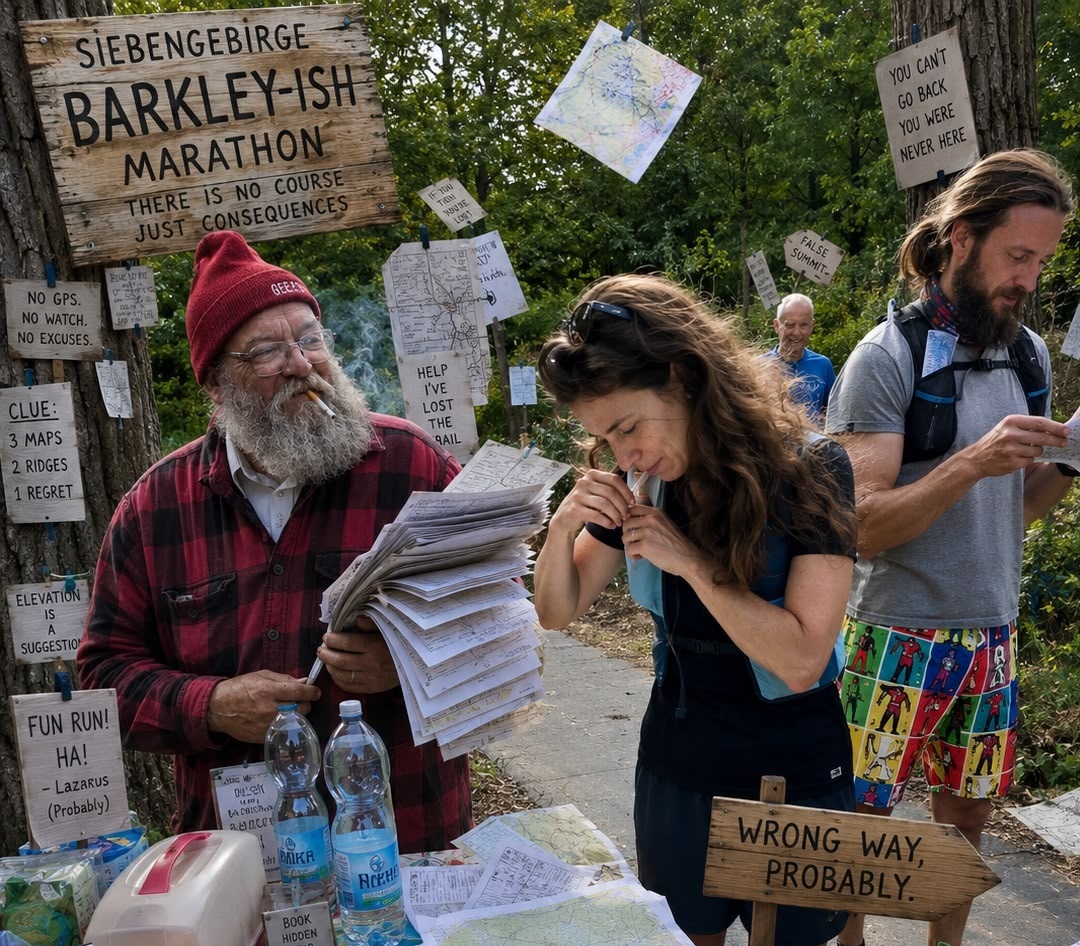
A Book-It List Adventure: The Spirit of Barkley in the Siebengebirge
The Barkley Marathons is one of the most unique trail running events on this planet. Every time someone finishes, the route is made harder – right on the edge of what is humanly possible. The Barkley’s fascination stems from its gruesome off-trail course, the 99% failure rate and some bizarre traditions, on which you can read more on Wikipedia or watch documentaries such as this one on the finisher Jasmin Paris.
Most importantly, participants have to work out their way with a map and a compass, finding books along the course and removing the page corresponding to their race number from each book as a tangible proof of completion. Neither digital devices (GPS, watch, cell phone…) are allowed nor support outside the base camp. Other events – with their marked routes, aid stations, drop bags, helpful volunteers, pacers, cheering zones, encouraging spectators, you name it – tend to be designed so that racers finish. The Barkley is designed so that racers fail. Abandon all hope, ye who enter here.
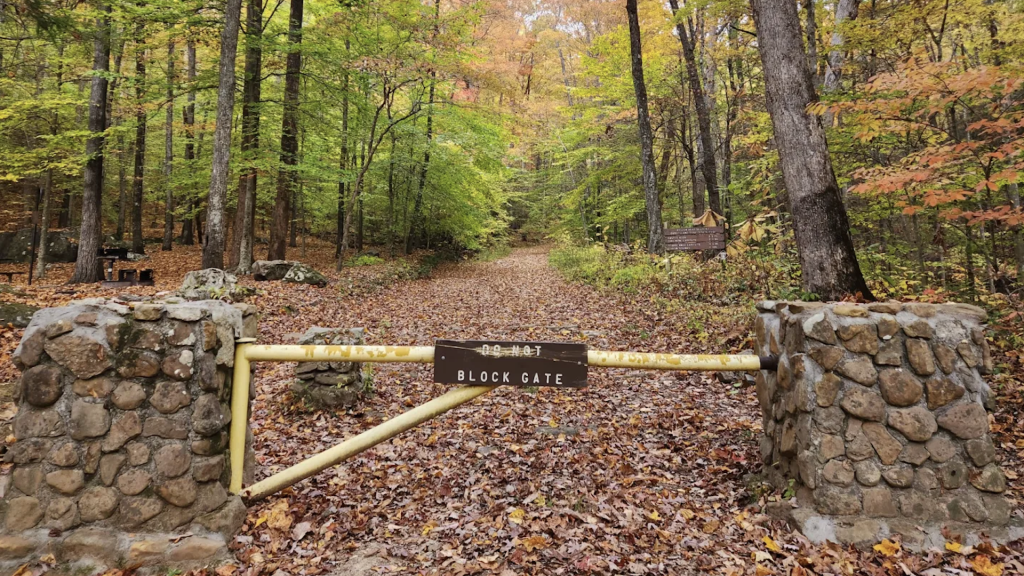
Despite its name-giving inspiration, Volker's announcement of the first “Barkley in the Sevens - 7hills, 0mercy” sounded comparably mild. Three laps of increasing difficulty were to be completed within the allotted time: 1h for round 1, 2h for round 2, 3h for round 3, thus totaling six instead of sixty hours. No sleepless nights to be expected. Navigation with a topographic map, books hidden at distinctive landmarks in the Siebengebirge. Take the page corresponding to your race number, yes, I have that zip-lock bag ready!
We were all “virgins” to go “out there”, in the spirit of the event, stripped from our usual sport watches and phones. At the first fork on the road, we split into two groups….
Running Into the Unknown: Finding and Sharing Adventure
I was incredibly fortunate to share this experience with two true running sole-mates. The journey, however, did not begin on the day of the event – it began about six weeks earlier and became an adventure in its own right, filled with anticipation, preparation, endless discussions, the race itself, and the conversations that have followed since. Sparked with curiosity, different minds buzzed with different questions. Where would Volker and Hermann hide the books? How large would the search radius be? Would race numbers change between rounds, would all books contain the pages we need? We pored over maps, calculated the maximum possible distance of each round, speculated where the course could lead us, and tried to unravel clues the race offered before we had even taken a single step. We even found ourselves immersed in surprisingly passionate discussions about whether an analog watch would prove indispensable. Above all, the central question was: would we be allowed to work together? As what I cherish most is the excitement we shared. And yes, we were allowed to embark on this challenge together. Each of us carried their own strengths, instincts, and uncertainties, but those differences never divided us – they complemented one another. We enjoyed running together, we celebrated small breakthroughs, we shared moments of fun and of frustration, and we quite literally lifted rocks to find that one book which refused to reveal itself for what-felt-like-10-minutes.
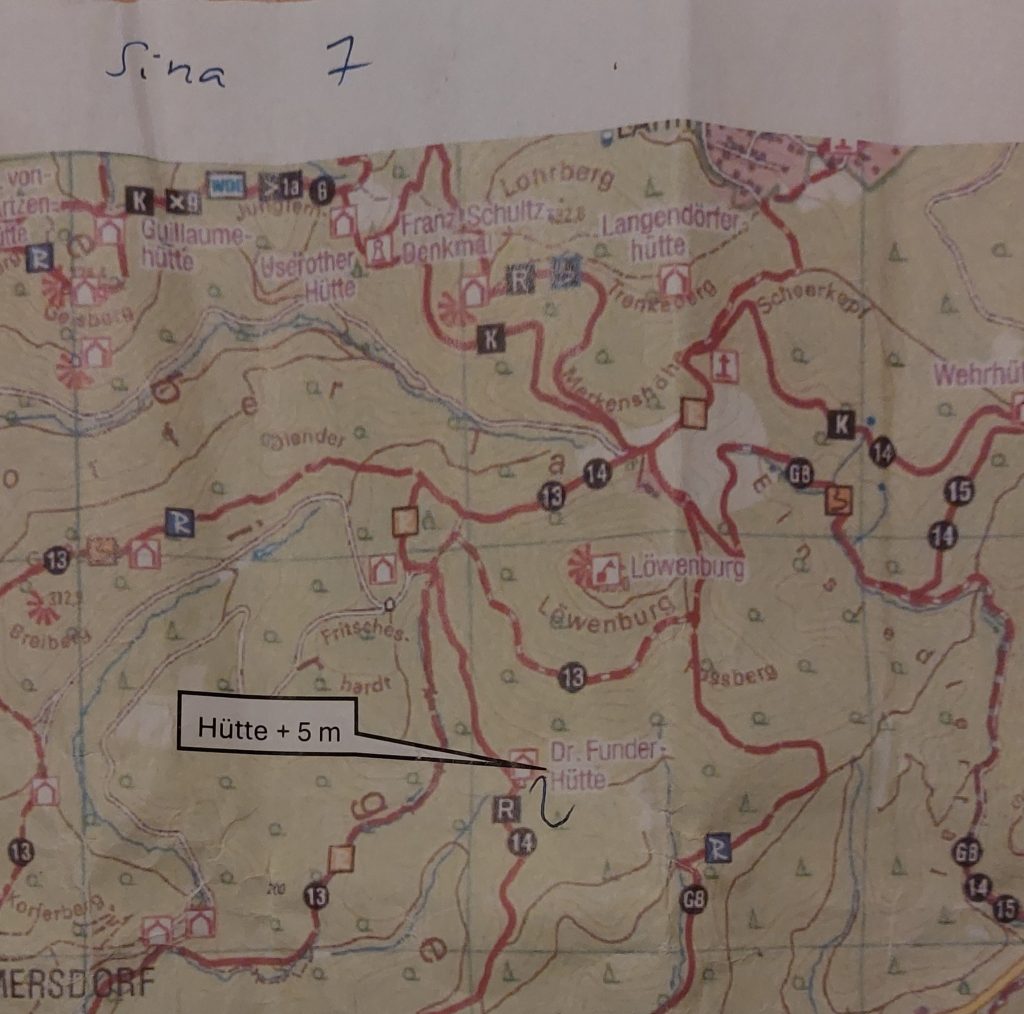
Despite all the questions we tackled with enthusiasm before the event, moments like the latter restored feelings of uncertainty and reminded us that the Barkley Marathons is deliberately designed to resist quantification. In a world that constantly invites us to measure ourselves (see Ingo’s post When Garmin Starts Telling the Story), the Barkley asks us to trust ourselves instead. To embrace uncertainty and to (re-)discover the quiet wisdom of our own senses. The individual route length and elevation profile depends on your decisions regarding your sense of direction, your memory on local conditions, your judgment on which paths are better to run up- or downhill, your navigation skills. Every decision about footing, direction, and pace is yours to make (Part II - Running Off The Map)… starting on the first fork on the road, in the first round.
When Less is More, how do You Keep Score?
One surprise overshadowed all the speculation we had entertained during the weeks before: there were only eight participants. We had imagined a much larger field. After all, the concept was so unique and compelling that we had assumed it would attract a crowd of like-minded adventurers. Instead, we found ourselves in a rather intimate gathering in Hermann’s garden, which made the event feel even more special. It seems that what drew us in, had for many others been a reason not to sign up at all. Not tracked, not on Strava or any other social validation machine. No medal to showcase around, no running stones to collect, no podium for winning your age group. We didn’t even take home the book pages.
The purpose of a journey is not always to produce a perfect record(ing).
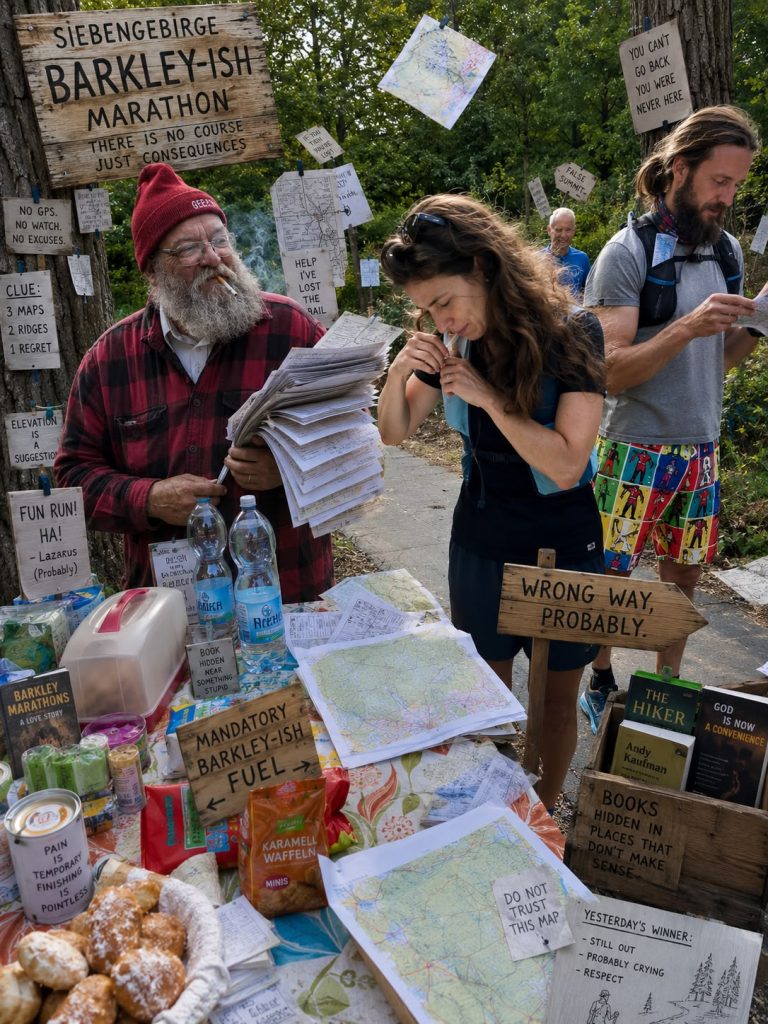
PS: If you desire closure for names, times, and loop results, check out Volker’s report.
Written by Sina@Lozania-Lifestyle.de