
Part II - Running Off The Map
Part 1: The Loop I Couldn't Leave told the story of Sina pulling me through the Eifel marathon — and through a fair amount before it. This is what happened once that pull pointed me somewhere new.
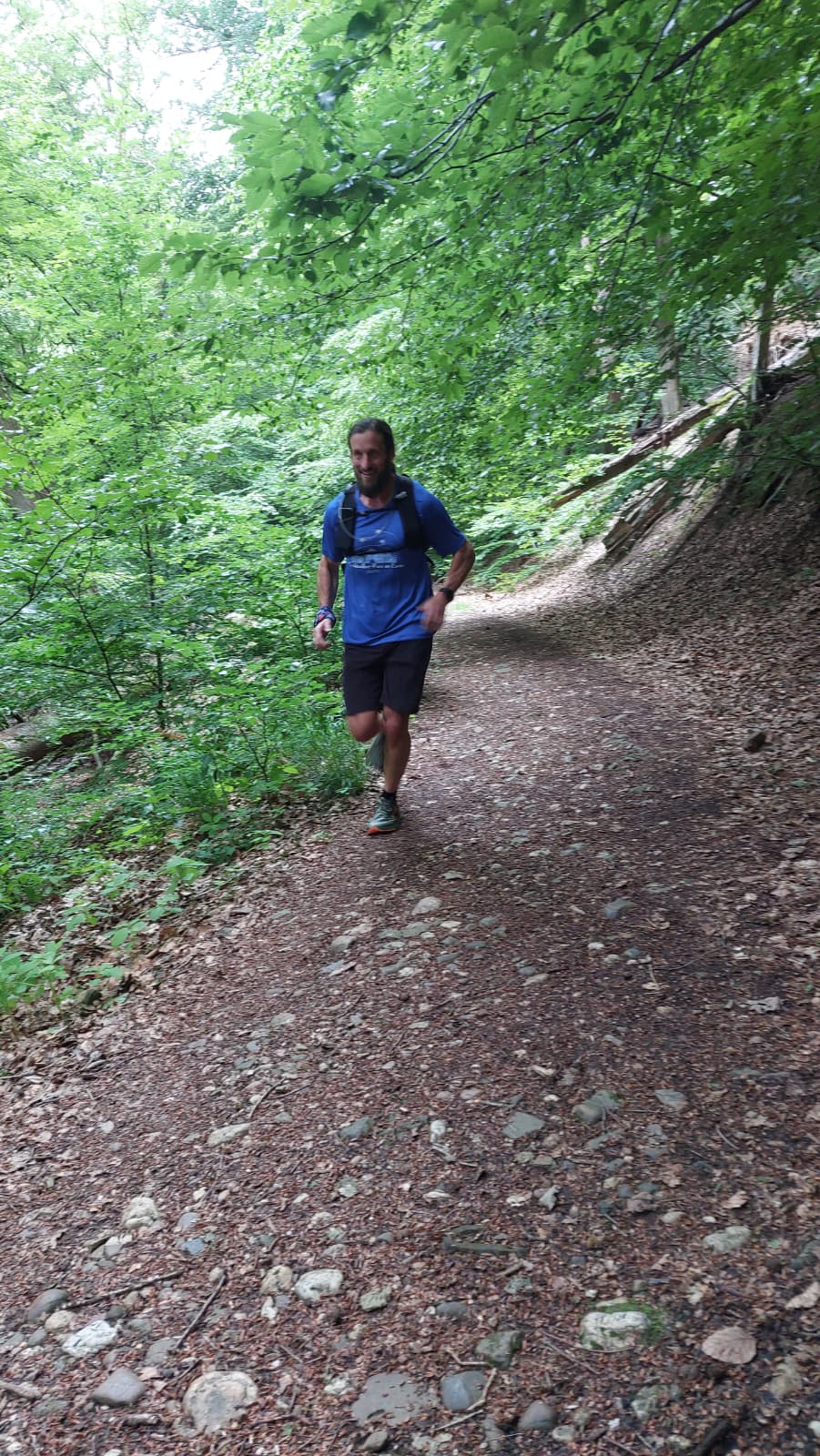
Barely 50 kilometres from the loop I'd run for years sits the Mëllerdall: sandstone gorges, ladders, a trail marked so well there is no missing it. You know exactly how difficult it might be. There are water fountains dotted along the entire route. And if you somehow still lost your way, you'd have full signal to check. Oh, and there's no shortage of route guides online. Still, I never went; not as a child, not until I was 16. Or let's be honest: we never went as a family. It took some outside encouragement to go out, run, and see what was so close to me all along.
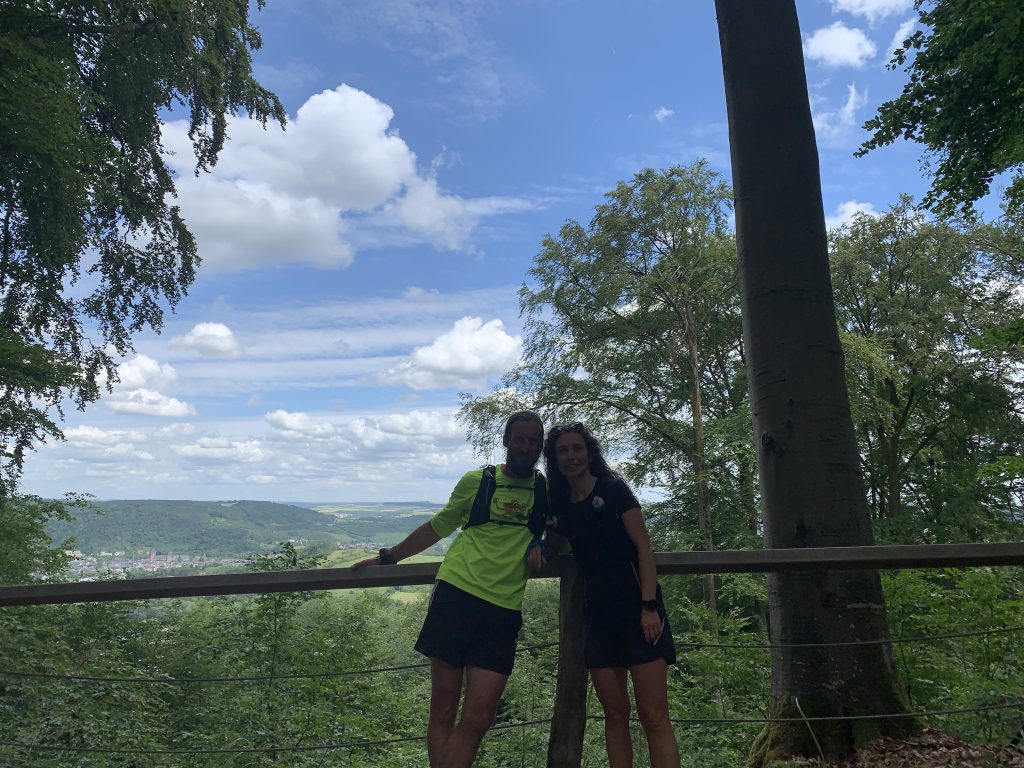
Because in the years since, I have mostly been looking for something else: somewhere else, somewhere, I could be certain I had not stepped foot before; or maybe felt that barely anyone else had. Albania, for instance. I went looking to help establish trail running there, not just as a culture but as a business. A trip where I went looking for trails and mostly didn't find any. No signposts. No reassurance that the path you're on goes anywhere at all. No phone signal to fall back on, no guide to consult. What struck me wasn't frustration: it was how alive the running felt. Every decision about footing, direction, and pace was mine to make, with no infrastructure quietly making it for me, no technology that eased the way.
What We Don’t Know About Where Trail Running Takes Us
That contrast is, I think, exactly the pattern researchers have noticed wherever running has taken off as a public health priority. Cities and regions invest in making space attractive for runners — paths, signage, lighting, the works. It draws people in, and it should: that infrastructure is genuinely good for public health. But the runners who stick with the sport longest are often the ones who eventually start finding that same infrastructure too managed. One study on running environments found this directly: more experienced runners increasingly experience constructed, well-designed public space as something to get away from, not something to use[1].
Solitude, and a kind of raw unpredictability, becomes the thing they’re actually running toward. Follow that instinct far enough and it doesn’t stop at preferring the unmarked trail to the signposted one. It can become ultra-distance, multi-day, genuinely off-grid running; the furthest version of away there is.
Here’s the part that doesn’t get talked about enough: we don’t actually know what that does to a body over the long term. There are decades of solid evidence that moderate exercise is good for you. There’s almost none on what happens when you take that logic to its extreme: “what fifty, sixty, eighty kilometres at a time does to your heart, your kidneys, your gut, your joints?”, especially if you’re a woman, or over 35, or carrying a condition nobody’s studying for this[2].
Those are, not coincidentally, exactly the groups joining ultra running fastest right now. We’re recruiting people into the unknown faster than we’re learning what the unknown contains.
So, here’s a strange thought: the same infrastructure that gets people running well might also be quietly preparing some of those runners to go looking for somewhere that infrastructure doesn’t reach. Build a good enough path, for long enough, and eventually some runners outgrow it. Follow that outgrowing far enough, and you end up somewhere like the Mëllerdall, or an unmarked Albanian hillside, or beyond either, at the edge of what sport science actually understands.
I don’t think this is a reason to stop. I think it’s a reason to be honest about why we keep going. Ask most ultra or trail runners why: Why the sandstone ladders instead of the signposted valley path fifty kilometres away, why uncertainty instead of reassurance? And the answer is almost never “because the data supports it.” It’s something closer to: the unmarked trail gives you something the Premium Wanderweg can’t. Not the absence of good design, exactly, but a different kind of presence: your own footing, the weather on your skin, the ground itself deciding what your next stride needs to be.
We don’t have the health data to fully justify that pull. We may never have all of it. But we keep following it anyway, because it answers something that even the best-designed running path was never built to answer.
Written by Ingo@Lozania-Lifestyle.de
------------------------
[1] Hitchings, R., & Latham, A. (2017). How ‘social’ is recreational running? Findings from a qualitative study in London and implications for public health promotion. Health & Place, 46, 327–333. https://doi.org/10.1016/j.healthplace.2016.10.003
[2] Scheer, V., Tiller, N. B., Doutreleau, S., Khodaee, M., Knechtle, B., Pasternak, A., & Rojas-Valverde, D. (2021). Potential Long-Term Health Problems Associated with Ultra-Endurance Running: A Narrative Review. Sports Medicine, 52(4), 725–740. https://doi.org/10.1007/s40279-021-01561-3