

Who Are We When We Run?
Across the world, different anecdotes are utilized to motivate: while some sayings stress the importance of self, others stress the importance of interdependence. However, much research is based on the so-called Western view of the independent and autonomous individual whose internal traits drive his or her motivation. This approach might be too simplistic and may overlook important motivational dynamics in other cultural contexts. So, I ask the question: Who Are We When We Run?
Markus and Kitayama (1991) described two distinct construals of self: An interdependent construal positions the individual as embedded within a broader social whole, with behaviour and motivation shaped fundamentally by relationships and group membership. In contrast, an independent construal describes a bounded, autonomous self for whom others may serve as a point of reference or comparison, but do not constitute the self's core. Crucially, self-construal is not best understood as a fixed, hard-wired trait, but rather as a situationally responsive pattern; a learned way of relating self to other that can shift depending on context. The question then becomes: how do we identify these patterns empirically, and how do we disentangle the cultural and social elements that have shaped them within a given group?
Independent or Interdependent — Does It Matter Where You Run?
There is theoretical basis to suggest that shared environments can produce convergent self-construals across individuals of different cultural origins. Kitayama et al. (2009) proposed that "cultural affordances" — the values, practices, and social structures present in a given setting — shape how self-construal is expressed and reinforced over time. Gardner, Gabriel and Lee (1999) similarly demonstrated that self-construal can be situationally primed, shifting in response to environmental cues. It could therefore be argued that the shared values, norms, and social setting of trail running communities produce a specific motivational orientation; one that may favor interdependent rather than independent self-construal, regardless of participants' cultural heritage.
Researchers such as Matsumoto (1999) criticize Markus and Kitayama's framework as too generic, arguing that dualistic models must evolve to accommodate the interrelationship between personal traits that may even appear contradictory. This is a legitimate challenge, though it is worth noting that self-construal theory does not assume complete homogeneity within a broad culture. It rather proposes that members of smaller groups develop shared psychological patterns through sustained exposure to common values and social practices. Even as culture remains dynamic and ever-changing, there is reason to believe that identifiable patterns of self-construal can emerge within a specific observed community. For trail running, which is not bound by national borders, this raises a pointed question: does a transnational community built around shared values and practices constitute precisely the kind of smaller group that self-construal theory is equipped to describe?
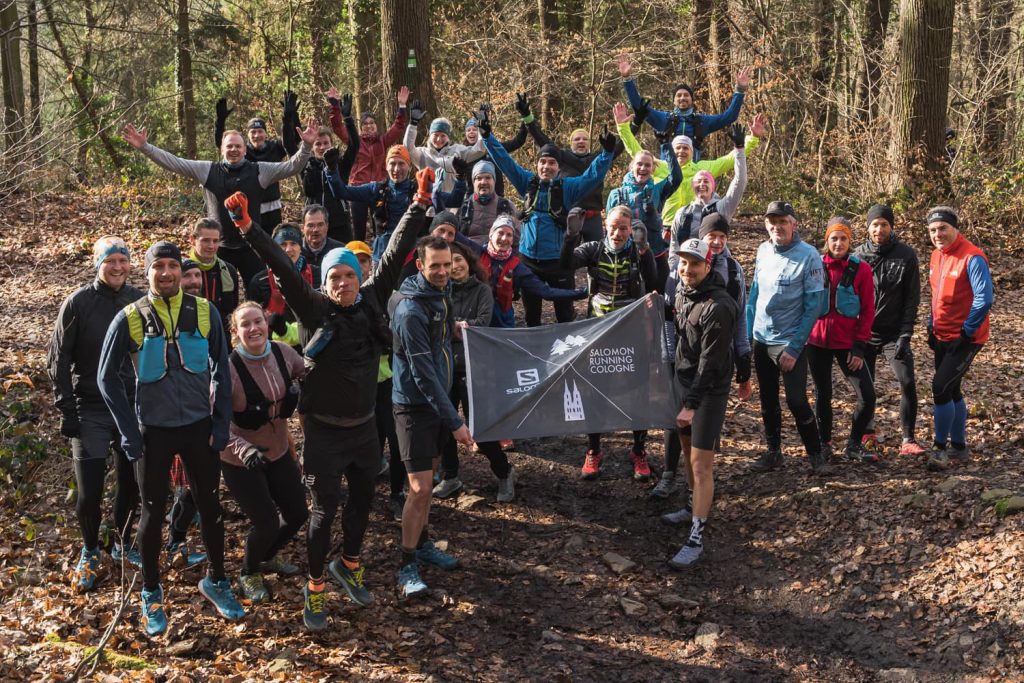
Within sport, the interdependent self-construal has been further differentiated into relational and collective dimensions (Brewer et al., 1993). Relational self-construal is expressed when athletes define themselves through specific interpersonal bonds (e.g., as a member of a particular running club), while collective self-construal emerges when they identify with a broader category (e.g., being a trail runner in general). Although individual athletes may lean predominantly toward one-dimension, self-construal theory allows for the simultaneous presence of independent elements, breaking with the original dichotomy.
Empirical research in sport remains limited; however, Dimmock and Grove (2006) found that sport team identification was consistent with self-construal orientation across other social domains, providing tentative evidence that self-construal identity does not remain confined to sport contexts alone. Trail running occupies an ambiguous position in this regard: it can function as both an individual endeavour and a collective pursuit and it therefore remains an open question whether self-construal theory provides sufficient precision to characterize the motivational profiles of trail runners.
Written by Ingo@Lozania-Lifestyle.de
References
Brewer, B. W., Van Raalte, J. L., & Linder, D. E. (1993). Athletic identity: Hercules' muscles or Achilles heel? International Journal of Sport Psychology, 24(2), 237–254.
Dimmock, J. A., & Grove, J. R. (2006). Identification with sport teams as a function of the search for certainty. Journal of Sports Sciences, 24(11), 1203–1211. https://doi.org/10.1080/02640410500497626
Gardner, W. L., Gabriel, S., & Lee, A. Y. (1999). "I" value freedom, but "we" value relationships: Self-construal priming mirrors cultural differences in judgment. Psychological Science, 10(4), 321–326. https://doi.org/10.1111/1467-9280.00162
Kitayama, S., Park, H., Sevincer, A. T., Karasawa, M., & Uskul, A. K. (2009). A cultural task analysis of implicit independence: Comparing North America, Western Europe, and East Asia. Journal of Personality and Social Psychology, 97(2), 236–255. https://doi.org/10.1037/a0015999
Markus, H. R., & Kitayama, S. (1991). Culture and the self: Implications for cognition, emotion, and motivation. Psychological Review, 98(2), 224–253. https://doi.org/10.1037/0033-295X.98.2.224
Matsumoto, D. (1999). Culture and self: An empirical assessment of Markus and Kitayama's theory of independent and interdependent self-construals. Asian Journal of Social Psychology, 2(3), 289–310. https://doi.org/10.1111/1467-839X.00042