
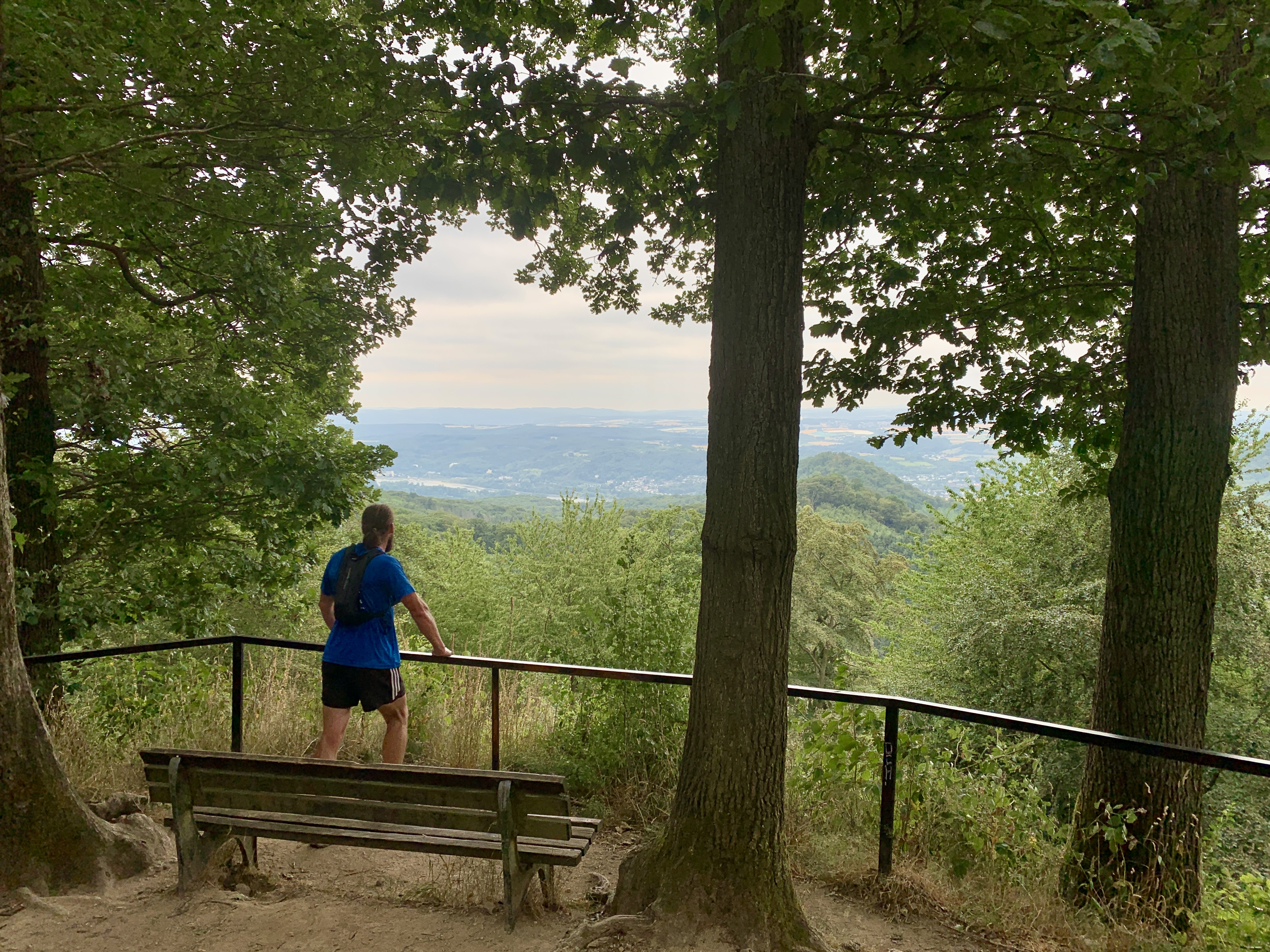
What comes of Identity over time, if an injury doesn’t resolve?
Lately, I have been wondering myself, what would happen when my injury doesn't resolve, when "re-storying" my athletic identity becomes a necessity rather than optional. This is less about pain-in-the-moment and more about identity-recreation-over-time. But, maybe, I have been gotten too involved and too old to reinvent myself?
Brewer and Petitpas[1] addressed the topic of athletic identity foreclosure in their paper. They discussed the theory behind and the impact an individual’s exclusive commitment to sport has on the development of their personal identity. Growing up, we face multiple choices on what we do and who we want to interact with. We form our own values, discover interests, and develop skills that will be parameters of our future identity. However, some of us, for instance athletes, do not go through such exploratory process, focusing exclusively on their athletic endeavour. This sole focus on a sport has been described as identity foreclosure[2] [3].
If we want to explore our own values and reach past what we learned during our parental identification, we need to explore and interact with others outside our inner cycle. If we fail to do so, we might be prone to develop an authoritarian personality with low autonomy. People might try to avoid an identity crisis by strongly committing to an endeavour that is either approved by parents and/or society, yet still fail to explore other opportunities. This endeavour may be grounded in sport participation, as it is oftentimes socially acceptable, and its common norms as well as values offers an easy way to forego any further exploration. Athletes may thus foreclosure the development of their identity, oftentimes during adolescence and risk mental health issues if, for instance, an injury unexpectedly ends their career.
We, as professionals need to be aware of the commitment an athlete has given to his/her sport, to understand the impact on their mental health. So, which tools can be used to regain a sense of self, even though the only identity ever known to us might have been the sport in its own right?
The physiological rehabilitation from musculoskeletal injuries is well understood, however, the psychological aspects are oftentimes overlooked. Furie[4] et al. conducted a systematic review to identify themes that should be integral part of interventions. Research reported higher risks of mental health struggles among athletes due to a loss of identity, which may lead to anxiety, distress, or even depression.
Medical reports state that there is a 77% chance of injury among athletes, the prevalence of mental health issues associate with such is currently unknown. Among elite athletes the numbers seem not to differ, compared to the general population, yet given the higher injury rates and mental consequences, the comparison might be flawed.
Musculoskeletal injury is consistently linked to worse mental health across all levels of competition. It often causes higher distress, anxiety and depression, eating disorder, and substance abuse. Though findings aren't fully consistent, a few studies, particularly on less severe injuries like knee, ankle, or soft tissue, found no correlation, suggesting severity and context matter more than injury status alone.
Involuntary retirement emerged as the second most consistent and severe theme in the review by Furie et al. Where retirement from sport is forced rather than chosen, athletes report substantially higher psychological distress than those who retire voluntarily. The loss is not the injury itself but the removal of agency over one's own athletic narrative.
Athletic identity functions as a risk amplifier rather than a fixed trait: the more exclusively an athlete's self-concept is bound to their sport, the more severe the depressive and anxiety symptoms tend to be during rehabilitation. This is the mechanism (identity foreclosure) rather than the injury itself doing the psychological damage. Retirement-specific consequences cluster around loss of purpose and social disconnection (e.g., loneliness, sadness, fear, and a felt loss of future) alongside practical risks like disordered eating, sleep disturbance, and substance misuse, especially among athletes that have not been given a formal transition plan.
Acute stress responses can appear within days of injury, and a notable proportion of these cases progress toward full PTSD criteria. Barriers to seeking psychological support after injury are structural as much as personal: stigma, lack of education about what help is available, and accessibility. That means that the "cure" isn't only clinical, it's also about the care team routinely offering the pathway rather than waiting for the athlete to ask. Where interventions were tested, mindfulness- and acceptance-based approaches (MBSR, ACT) showed measurable benefit in reducing anxiety, better pain tolerance, improved wellbeing; though the evidence base is slim (single-case and small-sample designs). The authors' proposed model (Integrated Sports Injury approach) frames injury response as biopsychosocial. The same factors that predict injury onset (stress load, personal/situational context) also shape the psychological response to it. In conclusion, rehabilitation should be planned as one continuous process rather than physical-then-psychological in sequence.
I didn't expect to find myself inside this literature while writing it. Between the MSc and a stretch without paid work, running has quietly become the scaffolding for my days — the thing that tells me when to get up, where to go, what the day is for. Reading Furie et al., the line that stayed with me wasn't about injury at all: it's that the risk isn't the sport, it's how much of the self gets built on that one foundation. Sina and I have started asking each other, half-joking and half not, what's actually holding us up if running ever couldn't. It feels like a fair question to sit with, and maybe a useful one to leave open here rather than answer too neatly.
Written by Ingo@Lozania-Lifestyle.de
[1] Brewer, B. W., & Petitpas, A. J. (2017). Athletic identity foreclosure. Current opinion in psychology, 16, 118–122. https://doi.org/10.1016/j.copsyc.2017.05.004
[2] Pearson, R. E., & Petitpas, A. J. (1990). Transitions of athletes: Developmental and preventive perspectives. Journal of Counseling & Development, 69(1), 7–10. https://doi.org/10.1002/j.1556-6676.1990.tb01445.x
[3] Petitpas, A., & Champagne, D. E. (1988). Developmental programming for intercollegiate athletes. Journal of College Student Development, 29(5), 454–460.
[4] Furie, K., Park, A. L., & Wong, S. E. (2023). Mental health and involuntary retirement from sports post-musculoskeletal injury in adult athletes: A systematic review. Current Reviews in Musculoskeletal Medicine, 16(5), 187–194. https://doi.org/10.1007/s12178-023-09830-6