The Price of Free: What Parkrun Really Costs in Social Capital
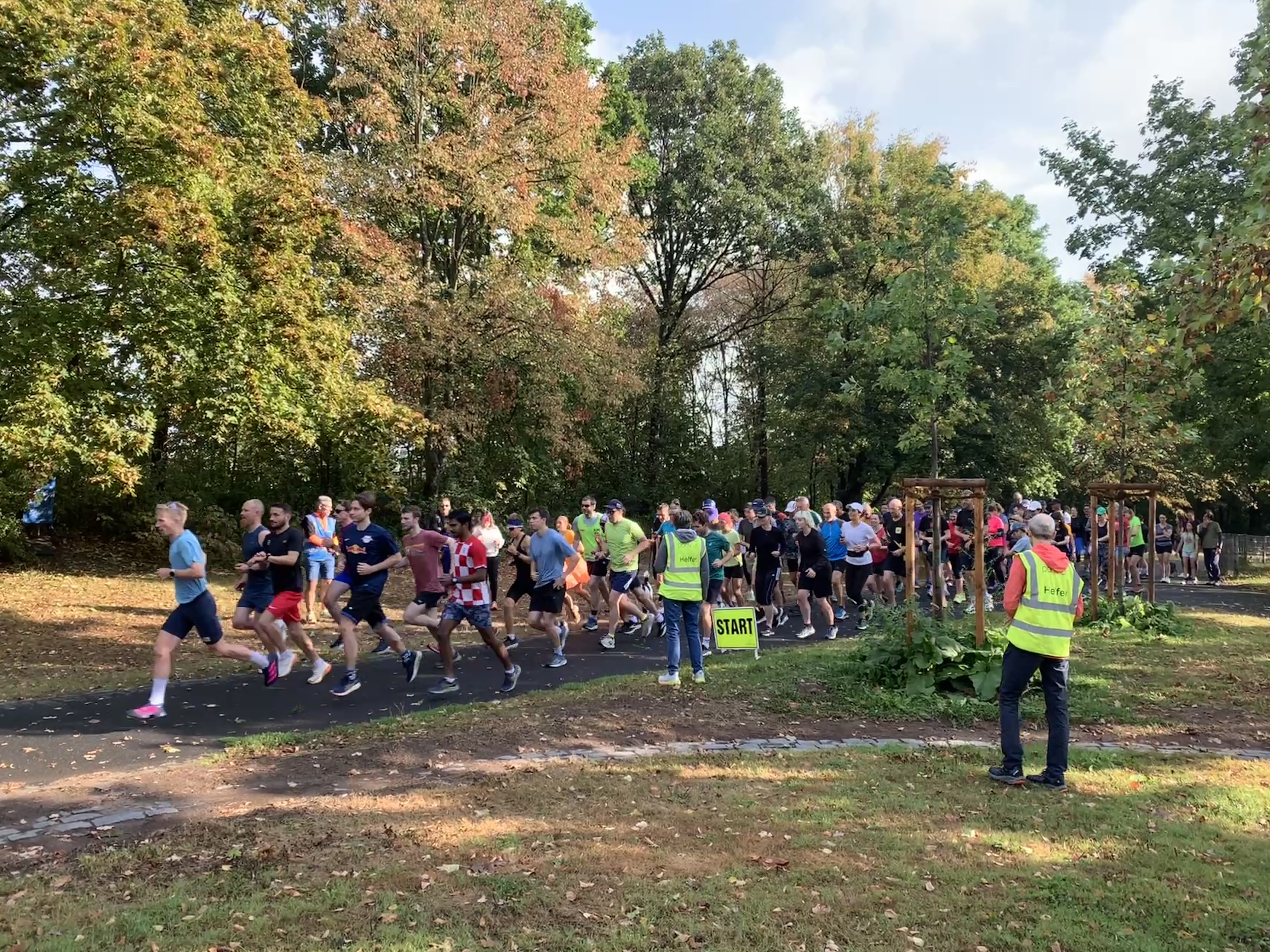
I ran my first Parkrun™ in 2013. Back then, I didn’t even know about the global initiative that launched on 2 October 2004 in Teddington, UK. I only made that connection in 2022, around the time of my first Rheinaue Parkrun event, the local Bonn edition. As of today, Parkrun runs across roughly 2,800 locations in 23 countries, has logged close to 140 million individual finishes, and passed its one-millionth cumulative event this summer. Well over a million people have volunteered along the way. For an up-to-date count, visit elliottline.com/parkrun. Many stories lie in between, many voices that could be heard, but I’ll leave those to our Trail Voices section. This one is for the research nerds, and it explores the role Parkrun may play in the accumulation of social capital.
The research I’m referring to in this post is by Wiltshire and Stevinson[1], published in 2017, thirteen years after Parkrun’s inauguration in the UK. The authors wrote “Exploring the role of social capital in community-based physical activity: qualitative insights from parkrun” while Wiltshire was at the University of Bath and Stevinson at Loughborough. Bath sits on the other side of the Bristol Channel from where I ran my first organised 5k, in Cardiff. They’re addressing social inequalities in health promotion and physical activity, and the potential of something like Parkrun, free and open to everyone, to help close that gap. The researchers set out to understand Parkrun’s impact on social capital within a community, and how people get drawn into, or in research terms, socialised into, the activity. Long story short: word of mouth and existing networks seem to do most of the work. That’s clearly beneficial for some, but it remains questionable whether it’s enough to bridge socio-economic divides.
Research suggests that health promotion and physical activity in Western societies vary, partly depending on socioeconomic status. That, in turn, contributes to health issues concentrated among lower social classes, which raises the question of what could actually mobilise people who are inactive for financial or cultural reasons.
Parkrun is a free, volunteer-led, community-based activity. Its distance, 5 kilometres with no cut-off time, makes it accessible to walkers and runners alike. Events take place in public parks at 9am every Saturday, running on a reliable schedule worldwide. There are even volunteer sighted guide runners, and wheelchairs or mobility scooters are permitted wherever the course allows, which is mostly the case. Instructions are usually given in both the local language and English, and volunteers are happy to bridge the language barrier otherwise. So there seems little standing in the way of Parkrun becoming a vehicle for physical activity that reaches beyond social and cultural divides. But does it?
Evidence suggests that the more social bonds we form, the more social capital we accumulate, and that this resource correlates with health. There’s an emotional connection on one side, and a push toward a more active, or rather healthier, lifestyle on the other. Perhaps we could speak of a body-mind-social connection. A study by Ueshima et al.[2], for instance, found that more social capital was related to more physical activity. Though that research was conducted in Japan, other studies have found similar correlations (cf. Lindström et al., 2001[3] and Ball et al., 2010[4], as cited in Wiltshire and Stevinson).
Free sporting events seem to be a low-hanging fruit for building social capital, and with it, emotional and physical well-being. Sport is often said to be a vehicle for social cohesion and community pride, and Parkrun seems to play both sides: strengthening social ties from within, and presenting a ready-made community to visitors. There’s even an app for Parkrun tourists (see >>here). However, Bourdieu[5] argued that the social networks we form are framed by social, economic, and cultural limits. Any policy intervention aiming to promote social capital through physical activity would therefore have to bridge all three elements to actually limit disparities. An activity like Parkrun would need to establish shared values, a habitus in Bourdieusian terms, to form a subculture that lives beyond the mainstream. How else would we know, if not by asking the people who’ve been drawn into it? Which is exactly what Wiltshire and Stevinson did.
Among their interviewees, 65% discovered Parkrun through family members or friends, 15% found it independently but attended their first event with a partner, and 20% just happened to be there. I seem to belong to that middle group: I ran the 5k in Cardiff on my own, and only realised almost ten years later that it had been a Parkrun all along.
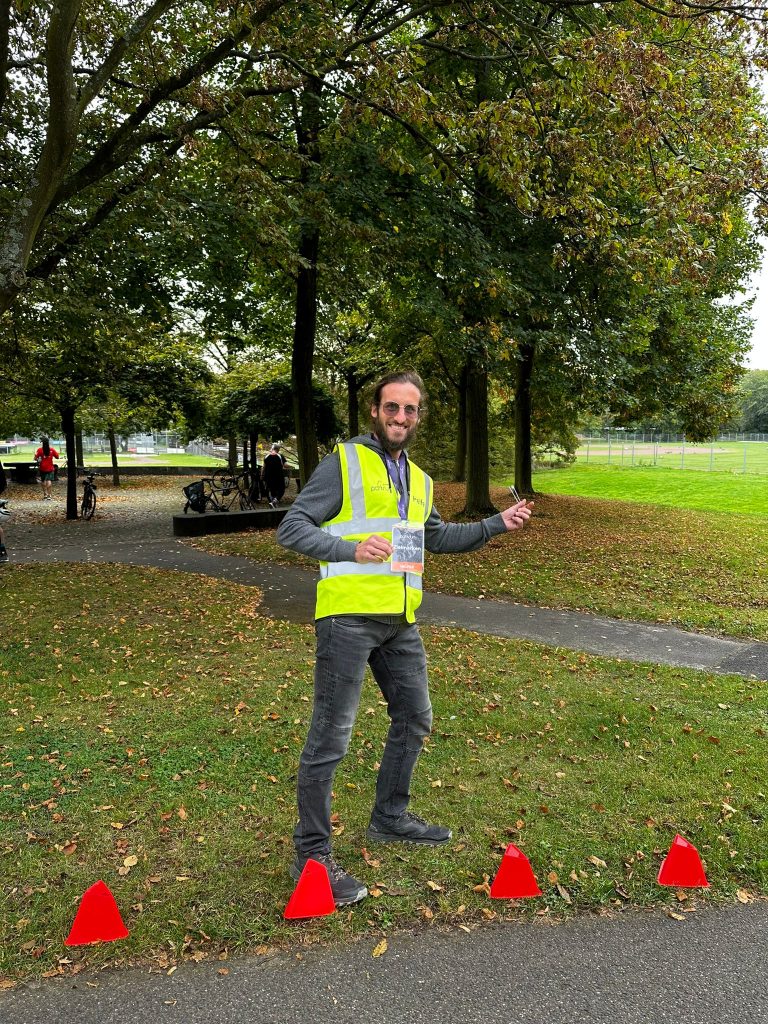
So, what’s the takeaway, in the authors’ own words? Three things, in the end. First, most people don’t stumble into Parkrun alone. They’re pulled in by someone they already know: a partner, a friend, a colleague, a parent. Second, once you’re in, the whole thing runs on borrowed labour. Marshals clap you round, strangers pace you through your last kilometre, and most participants feel a quiet debt to repay by volunteering eventually. Third, the network itself becomes a source of know-how: injury advice, pacing tips, the confidence to call yourself a runner in the first place, all passed along by people who were once new too.
Wiltshire and Stevinson end on a genuinely mixed note, and I appreciate that they don’t smooth it over. On the optimistic side, Parkrun does seem to lower the financial and geographic barriers that usually keep low-income groups out of organised sport, and even the loosest ties, a stranger cheering you through the last lap, turn out to carry real weight. But the more sobering point sits right alongside it. Whether you get pulled into Parkrun in the first place still depends on the social capital you already have, and that’s exactly the resource that’s distributed unevenly along socio-economic lines. Without some form of policy or structural push, the authors argue, initiatives like Parkrun are more likely to keep serving people who were already reasonably well-connected than to reach the people the free, no-barriers model was designed for. It’s not a failure of will on the part of those who stay away. It’s a gap that a Saturday morning 5k, however welcoming, can’t close on its own.
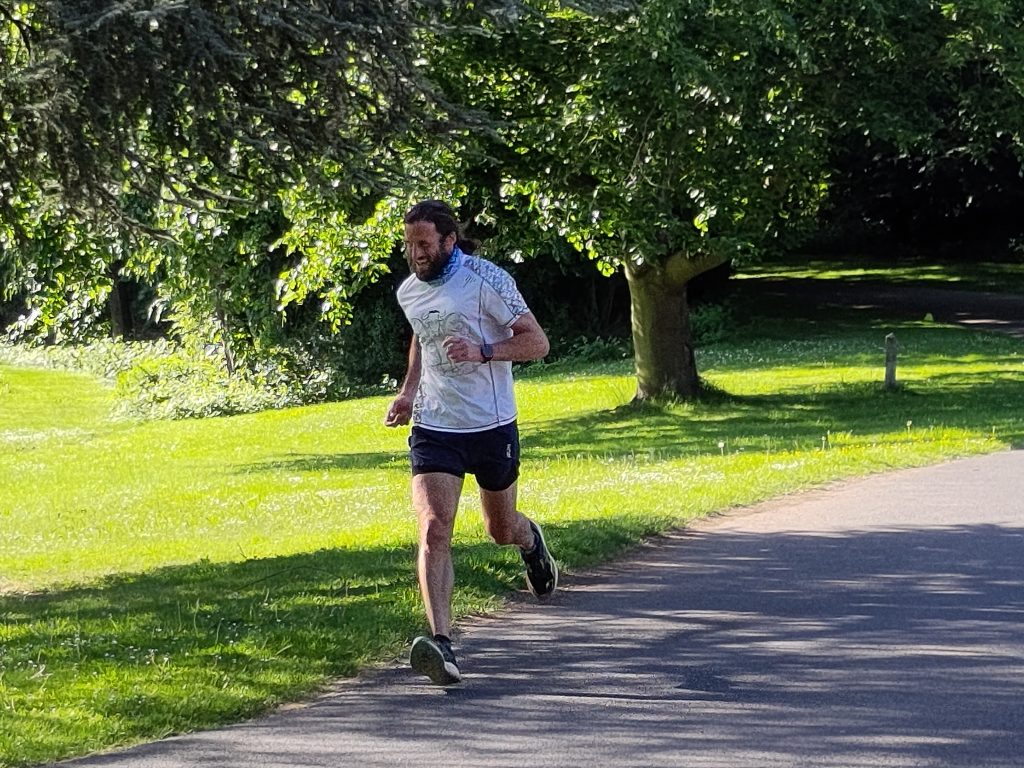
Which is a good place to end, because I get to test all of this firsthand this weekend. I'm heading to Lithuania, and Saturday morning will find me at the Vilnius Parkrun: a course I've never run, in a city where I don't know a single local face. No existing network, no word of mouth, and no fresh start either, as it turns out: each Parkrunner keeps the same barcode forever, and mine, it seems, was sitting around since Cardiff for ten years without me knowing. I've since used it in five countries, so Vilnius will make six. We'll see how much social capital a stranger can actually accumulate in one Saturday morning, and whether a Trail Voice even comes out of the experience. If Wiltshire and Stevinson are right, that puts me squarely in their smallest and most interesting group: the 20% who show up on their own. I'll report back on whether the marshals' clapping carries the same weight when there's no one there who already knows your name.
Written by Ingo@Lozania-Lifestyle.de
...
[1] Wiltshire, G., & Stevinson, C. (2018). Exploring the role of social capital in community-based physical activity: qualitative insights from parkrun. Qualitative Research in Sport, Exercise and Health, 10(1), 47–62. https://doi.org/10.1080/2159676X.2017.1376347
[2] Ueshima, K., et al. (2010). Does social capital promote physical activity? A population-based study in Japan. PLoS ONE, 5(8), e12135.
[3] Lindström, M., Hanson, B., & Östergren, P. O. (2001). Socioeconomic differences in leisure-time physical activity: the role of social participation and social capital in shaping health related behaviour. Social Science and Medicine, 52(3), 441–451.
[4] Ball, K., et al. (2010). Love thy neighbour? Associations of social capital and crime with physical activity amongst women. Social Science and Medicine, 71(4), 807–814.
[5] Bourdieu, P. (1986). The forms of capital. In D. Richardson (Ed.), Handbook of theory and research for the sociology of education (pp. 241–258). Greenwood.