
The Disciplined Body: What Injury Taught Me About Trust
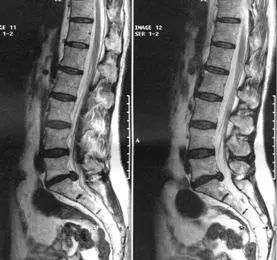
When I was 26, I slipped my intervertebral disc; two surgeries and almost a year later, I was back in the game – the sporting game. I swapped heavy weights for bodyweight exercises, the wild habitat where humans gather in fluorescent-lit cubicles for African desserts and Asian beaches. Since my back has never felt stronger; still, it feels like I keep on amping up the volume each year.
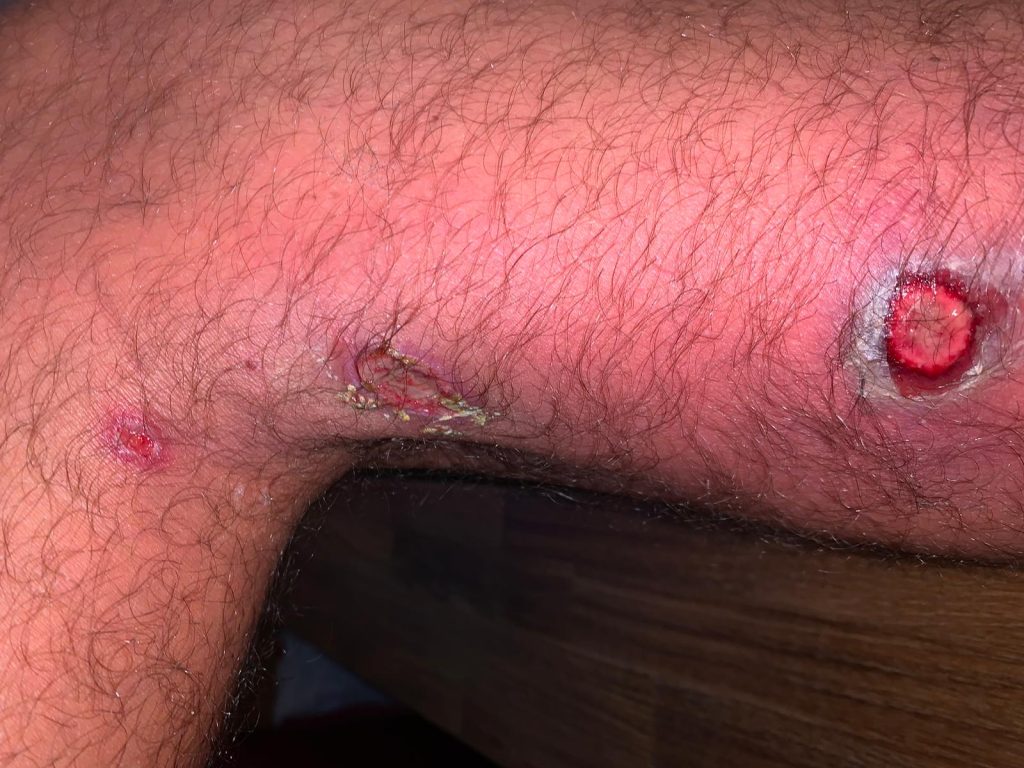
Five years ago, something else snuck under my skin: running. But not just that, something else seemed to have laid dormant for a while; a parasite from somewhere on this planet struck me hard two years ago, and let me feel the weight of no running for 6 months. No doctor could explain, no medical convention seemed to know what caused my body to be on high alert all-day, every-day. Eventually, the disease passed and this year, I might be running more miles than I had the last two combined.
Have I become so accustomed to pain that I just bite through it? May I even want that discomfort to feel alive and keep going further, harder, come out stronger? Here is what research has to say:
Hall et al.[1] conducted a meta-synthesis among ten ultrarunners, who got injured and tried to better understand their healing process. Ultra-running might differ to other long-distance races, such as road marathons, as runners have been described to develop a heightened sense of their body's movements and how it is positioned in space and time. This embodiment might allow them to better overcome pain and rely on their corporal understanding to heal.
Further, ultra runners seemed to understand their body as a functional object, that can be pushed to extremes, regardless of its appearance, which contradicts traditional discourse (i.e. exercising to look good). Research among endurance athletes found that they contextualize pain as part of the endurance activity, and not only accept it as part of their doing, but value it as a core element of their lived sporting experience. Oftentimes even judging themselves for too little investment in the development of their sporting self if they remain pain-free.
Long distance running can be understood as embodied experience, in which not the performance matters but the amount of discomfort and how one can live through it without quitting. Thus, most ultra running events might be pushing limits far beyond what seemed possible less through technology or new training methodologies, and more through a more embodied experience that acknowledges pain, injury and discomfort as a means to reach further.
Hall et al. concluded that ultra-runners focus less on physical appearance but on their ability to overcome discomfort; the pushing beyond being instrumentalized to define their identity. Experiencing pain appeared to become a shared-value among a more and more exclusive group of ultra-athletes, which an injury can interrupt. While some push further nevertheless, others seemed to be able to rephrase their identities, focusing on other physical activities. For instance, from more performance-oriented to a rather experienced-based running. If, however, medical support becomes unavoidable, and re-storying impossible, runners might face a drastic mental challenge to not be fully consumed by their injury. Being anxious and afraid that they face the risk to lose and have to let go of their formed identity.
Various themes can be drawn from their study: First, ultra-runners' embodied familiarity with pain tends to make them build a resistance to the medical gaze. They may either rely on a self-devised rehab program, actively avoiding face-to-face medical appointments and instead drawing on their own accumulated embodied knowledge. Hall et al. called this "The Disciplined Body"; an injured runner often trusts the runner-body over the doctor's advice.
Second, the "Embodied Distress," following Merleau-Ponty[2] phenomenology, Hall et al. argued that ultra runners find meaning and create an emotional response to pain immediately. Their feelings directly shape cadence, posture, breathing, stride. When an injury disrupts this, the runner's corporeal experience reorganizes around distress rather than around running. Long-distance runners tend to detect-then-distract from this distress (cognitive avoidance); ultra-runners tend to put more immediate distance between emotion and body by focusing on the mechanics of movement itself. It's the unfamiliarity of pain — not pain itself — that captures attention and triggers distress, since these runners are otherwise highly attuned to their bodily sensations.
Further two dimensions play a pivotal role in the researchers' model. Allen-Collinson's "time tube" phenomenon[3] described time slows and extends during acute pain. In contrast, it compresses when running is pain-free and pleasurable. Ultra-runners reported similar temporal extension during race-withdrawal pain, which might indicate that injury doesn't just disrupt body-space relations but body-time relations too.
Finally, from a social and sociocultural perspective, camaraderie functions as a coping resource, but also as a marker of an exclusive community with a shared pain threshold; a status, an injury might threaten. Runners prefer peer advice over medical advice partly from fear the medical dualistic gaze will tell them to stop running altogether — a distinct driver from simple distrust.
Reading Hall et al.'s work, I recognize more of myself than I'd like to admit. The disc, the parasite, the months of not running — none of it made me question whether I should keep pushing. If anything, it made the pushing feel more necessary. Maybe that's the "Disciplined Body" at work: trusting the runner-body over the doctor's verdict, not out of stubbornness, but because the body has its own accumulated authority. And maybe what I called "amping up the volume each year" is less an escalation than a return — running toward the version of distress that still feels familiar, still feels like mine, rather than the strange, disorganizing kind an injury brings. The question I asked at the start — have I become so accustomed to pain that I just bite through it — might not have a clean answer. But the research suggests I'm not alone in asking it.
Written by Ingo@Lozania-Lifestyle.de
[1] Hall, L., Rhodes, P., & Papathomas, A. (2022). Embodied experiences of injured endurance runners: A qualitative meta-synthesis. Qualitative Research in Sport, Exercise and Health, 14(4), 628-647. https://doi.org/10.1080/2159676X.2021.1989020
[2] Merleau-Ponty, M. (1962). Phenomenology of perception (C. Smith, Trans.). Routledge & Kegan Paul. (Original work published 1945)
[3] Allen-Collinson, J. (2003). Running into injury time: Distance running and temporality. Sociology of Sport Journal, 20(4), 331–350.