
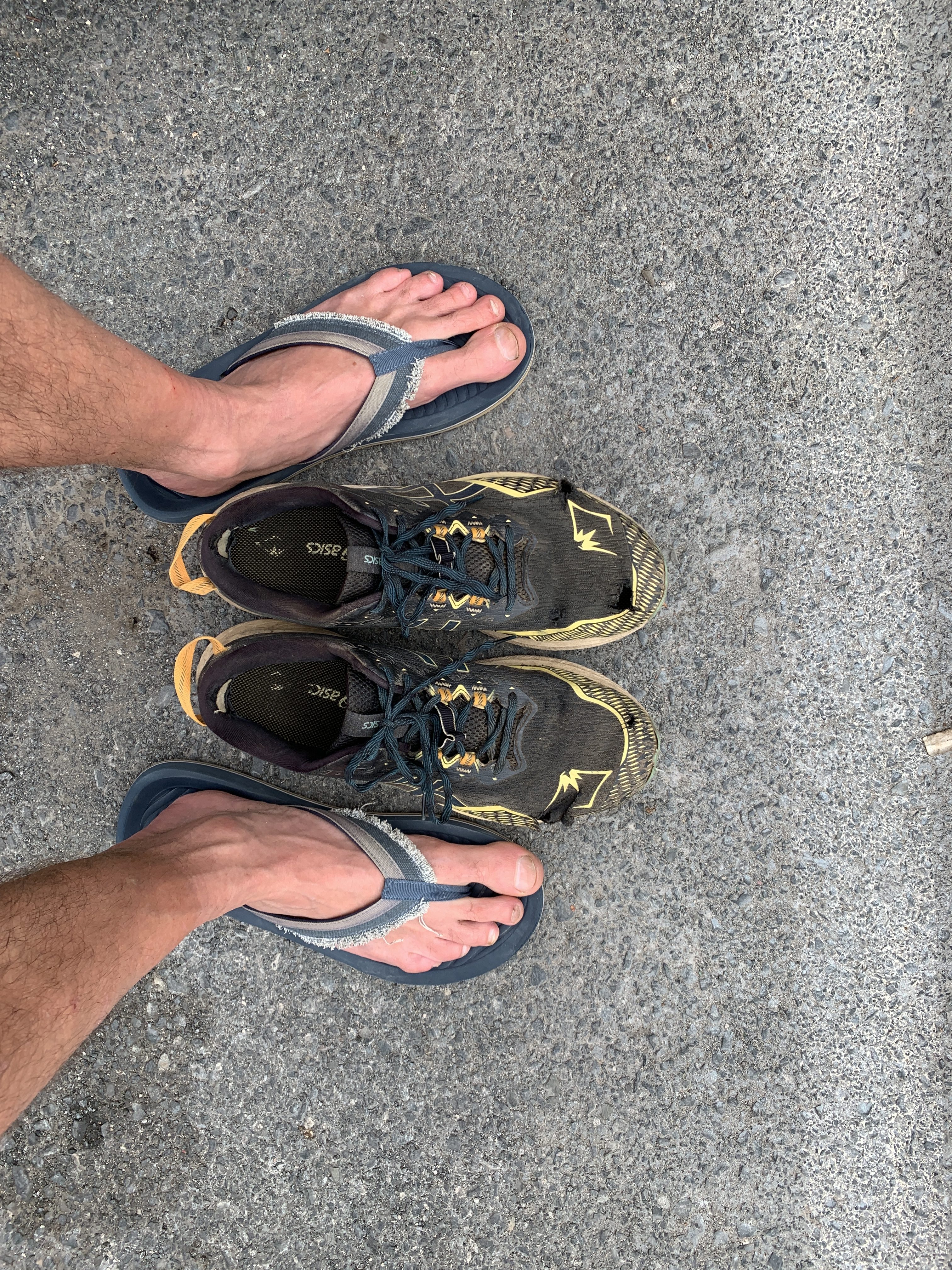
Sporting Embodiment among Trail Runners
Phenomenology, though carrying a long tradition originating with Husserl (2012), resists singular definition; it remains a dynamic and evolving field of inquiry. It is broadly understood as a transcendental philosophy that precedes scientific abstraction — an orientation toward experience as it is lived before it is analysed. Merleau-Ponty (1962) extended this tradition by recentring phenomenology on the body, arguing in Phenomenology of Perception that perception is not a cognitive act performed by a disembodied mind, but an active, worldly engagement mediated through bodily being. The body, for Merleau-Ponty, is the very ground of our spatial and sensory experience: we do not merely have bodies, we are our bodies in the fullest phenomenological sense. Embodied experience, in this view, is the conscious and pre-reflective perception of reality through physical sensation, movement, and presence — fundamentally distinct from abstract mental representation.
The study of sporting embodiment has gathered considerable momentum over the past two decades, yet questions remain about how cultural values and physical environments inflect that experience. Allen-Collinson and Jackman (2022) offer one of the most directly relevant recent contributions, examining the bodily sensations that female cross-country and trail runners experience through their interactions with earth and air during training runs. Their work employs sociological phenomenology to foreground what they term "elemental haptics" — the tactile, sensory encounters between the running body and the natural world.
Much research on sensory experience has centred on vision as the primary mode of perception, reflecting a particular Western hierarchy in which sight is privileged above all other senses. Within other cultural contexts, and arguably within certain sporting subcultures, bodily sensations communicated through haptic feedback — the felt texture of terrain, the resistance of wind, the temperature of air — may be far more constitutive of experience. It could be argued that trail running communities have constructed their own social and sensory worlds, with shared values that orient participants toward an embodied, tactile relationship with natural environments. In this lifeworld, the environment is not merely observed; it is felt.
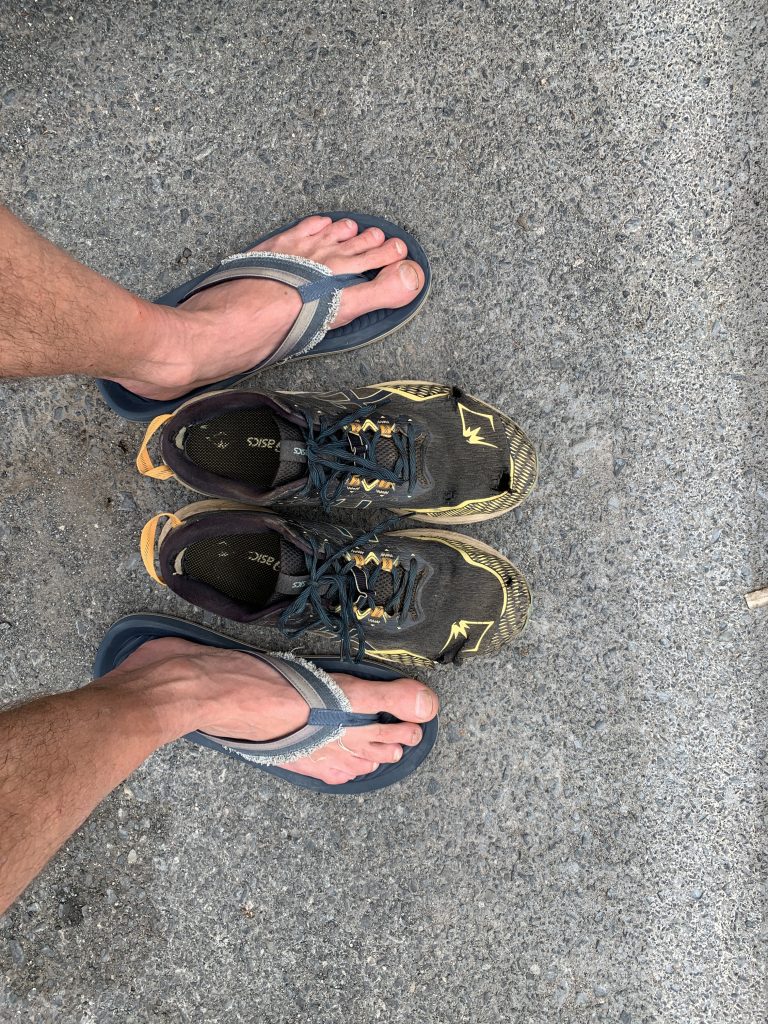
Trail running demands precisely this kind of multisensory engagement. Surfaces shift underfoot, weather fluctuates, and the terrain resists predictability — qualities that distinguish it sharply from other sporting contexts and that are central to its appeal. Phenomenology and sporting embodiment theory offer productive tools for understanding this attraction: the running body becomes, in Merleau-Ponty's terms, the primary site through which all sensory perception is gathered and synthesised. The body is not an instrument of locomotion moving through a neutral environment; it is in dialogue with that environment at every step.
Beyond the five classical senses, research suggests that kinaesthesia — the conscious awareness of bodily movement and limb position — and proprioception — its subconscious counterpart — are particularly salient in trail running, where the body must continuously calibrate its relationship to unpredictable surfaces. These "inner senses" are especially foregrounded in conditions of diminished visibility. When running in darkness, visual input is largely removed, and the runner must rely on haptic fee(t)dback to navigate terrain, maintain balance, and sustain momentum. Research has documented heightened sensory sensitivity among experienced long-distance trail runners, including a refined capacity to integrate information from multiple receptor types — mechanoreceptors, thermoreceptors, and nociceptors — while navigating varied and challenging terrain. Crucially, these senses do not operate in isolation: even in low light, tactile perception and residual visual input are intertwined, the body synthesising partial information from multiple channels simultaneously.
The experience of air constitutes a further dimension of trail running embodiment. Beyond its atmospheric qualities — temperature, humidity, elevation-related oxygen levels — air shapes pace, breathing rhythm, and subjective wellbeing. Allen-Collinson and Jackman (2022) describe a "breathing-body awareness" among runners, a heightened attunement to the air as an active presence rather than a neutral medium. Trail runners' well-documented preference for natural outdoor environments over indoor alternatives reflects, in part, this embodied orientation toward air as a meaningful element of experience rather than merely a physiological resource.
In sum, trail runners cultivate a relationship with natural environments that is irreducibly sensory, embodied, and dynamic. They willingly embrace the unpredictability of outdoor conditions — shifting terrain, changing weather, elemental exposure — as constitutive of, rather than incidental to, their experience. As Allen-Collinson and Jackman (2022) conclude, "runners must learn, develop, deploy, and refine a spectrum of sensory skills and ways of knowing, which over time and practice become embodied and incorporated into the sporting body-self, but never learned once and for all" (p. 647). This understanding of embodied learning as ongoing, relational, and environmentally situated provides an important conceptual resource for the present study, which seeks to understand how Vietnamese trail runners experience and narrate their motivational engagement with natural landscapes and running communities.
written by Ingo@Lozania-Lifestyle.de
References
Allen-Collinson, J., & Jackman, P. (2022). Earth(l)y pleasures and air-borne bodies: Elemental haptics in women's cross-country running. International Review for the Sociology of Sport, 57(4), 634–651. https://doi.org/10.1177/10126902211021936
Husserl, E. (2012). Ideas: General introduction to pure phenomenology (F. Kersten, Trans.). Routledge. (Original work published 1913)
Merleau-Ponty, M. (1962). Phenomenology of perception (C. Smith, Trans.). Routledge & Kegan Paul. (Original work published 1945)