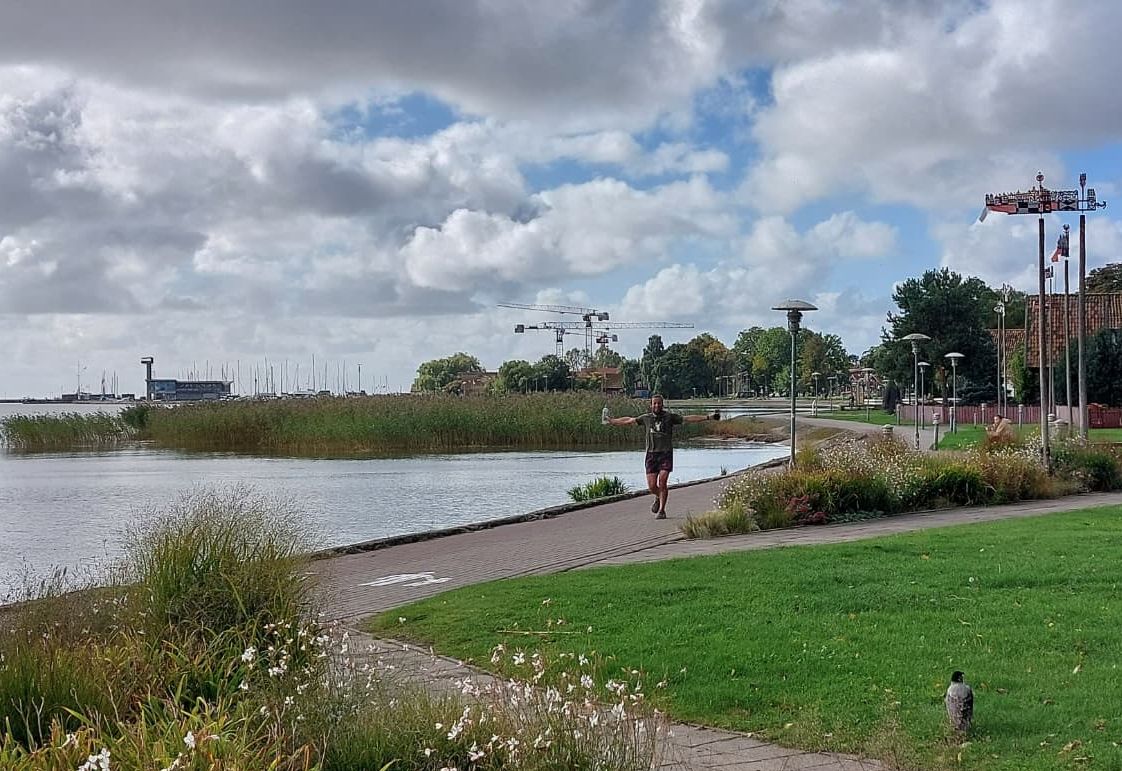
Five Towns and a Second Religion: Running Through Lithuania
Arriving in Lithuania on a Thursday morning, I was out of the door in ten minutes at Kaunas airport. On the way out, past an indoor basketball court, the first sign of the sporting culture that makes this country so worthwhile visiting as an exercise enthusiast. We picked up our hybrid car ahead of schedule, exchanged a few smiles at the rental desk, and set off for the capital, Vilnius.
It's worth pausing on that basketball court, because it isn't incidental. Basketball is known here as "the second religion", and the nickname is earned rather than cute: Lithuania has won three EuroBasket titles and three Olympic bronze medals for a country of under three million people, and the 2015 EuroBasket final against Spain was reportedly the most-watched broadcast of the century here. That's not a stat you'd expect from a country that felt, walking around, unusually young.
Here's the odd part. The data don't actually back that impression up. Lithuania's median age sits around 43, among the higher end in Europe, and the population has been ageing faster than almost anywhere on the continent, shaped by two decades of low birth rates and heavy emigration since EU accession. So the youthful energy I picked up on wasn't really demographic. It's more likely the university cities doing the work: Vilnius and Kaunas both carry large student populations, and the country has spent the last decade and a half deliberately building outdoor sport into daily life. A National Sports Development Strategy, now running to 2030, pushes municipalities to fold sport into ordinary urban planning rather than treat it as a separate, fundable extra. What I was reading as youth was probably just visible infrastructure.
Vilnius: Forest, Hills, and a First Omnigym
We checked into our first apartment a little on the outskirts of town, which turned out to be a good base for some trail running. The first day, though, was just about exploring downtown and settling in.
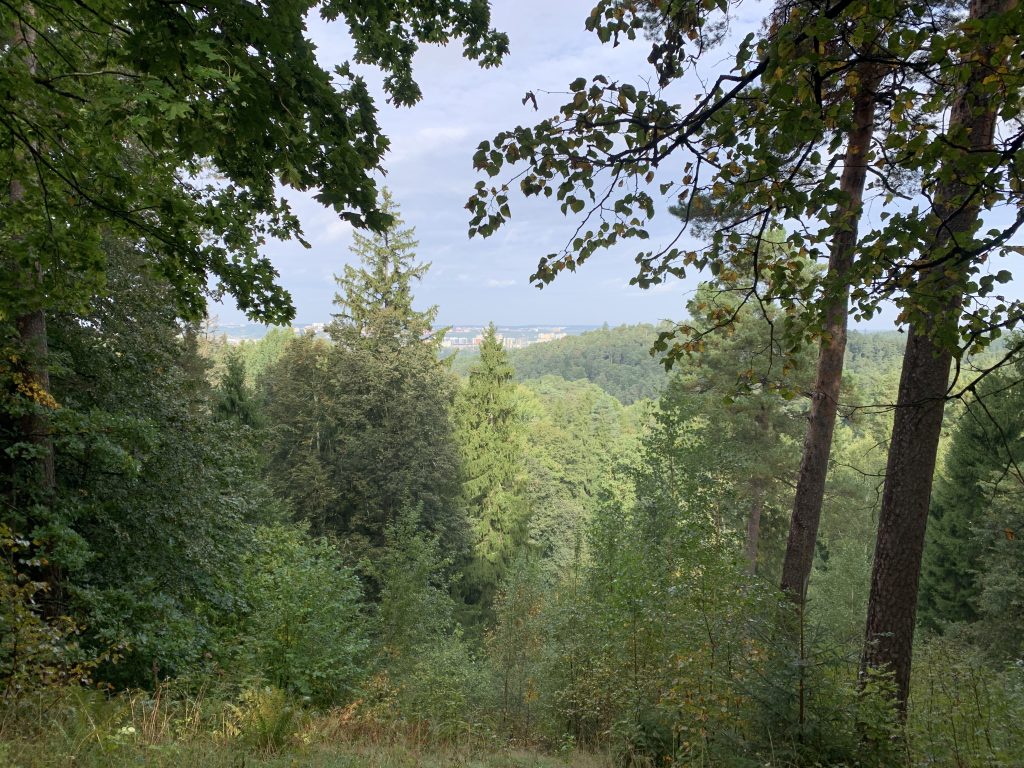
On Friday I went through the nearby forest, jumping over roots and tracks, up and down some rather steep hills. 10.8 kilometres and around 200 metres of climbing later, I reached the Neris river and the calisthenics park on its bank. Not with all that much energy left, but who can say no to an Omnigym?
It's worth explaining what makes an Omnigym worth stopping for. Calisthenics done well is a complete practice. A skilled practitioner can build real full-body strength using nothing but their own bodyweight and a bar, but that takes years of practice: the progressions, the control, the patience to earn a muscle-up or a front lever properly. Not everyone has that runway, or wants it. This is where adjustable weight changes the equation. Several of the stations are built to mimic the machines you'd recognise from an actual gym, a chest press here, a lat pulldown there, with explanations how to use them. The company is Finnish, designed and manufactured in Turku, and its patented weight units, typically 10 to 50 kilograms per unit and up to around 100 kilograms when two are stacked on a single machine, mean you don't need to already be skilled to load a real strength session outdoors. Where bodyweight training rewards mastery, a loadable pin lets a complete beginner and an advanced lifter use the same station and still find something that challenges them. The equipment is developed in partnership with the University of Jyväskylä's Faculty of Sport and Health Sciences, and the company has since expanded well past Finland: over a thousand units installed, more than 170 sites across Europe, and outposts as far as Singapore. Lithuania, it turns out, was an easy country to win over.
Trakai: A Flat-Out Run and a Dip in the Lake
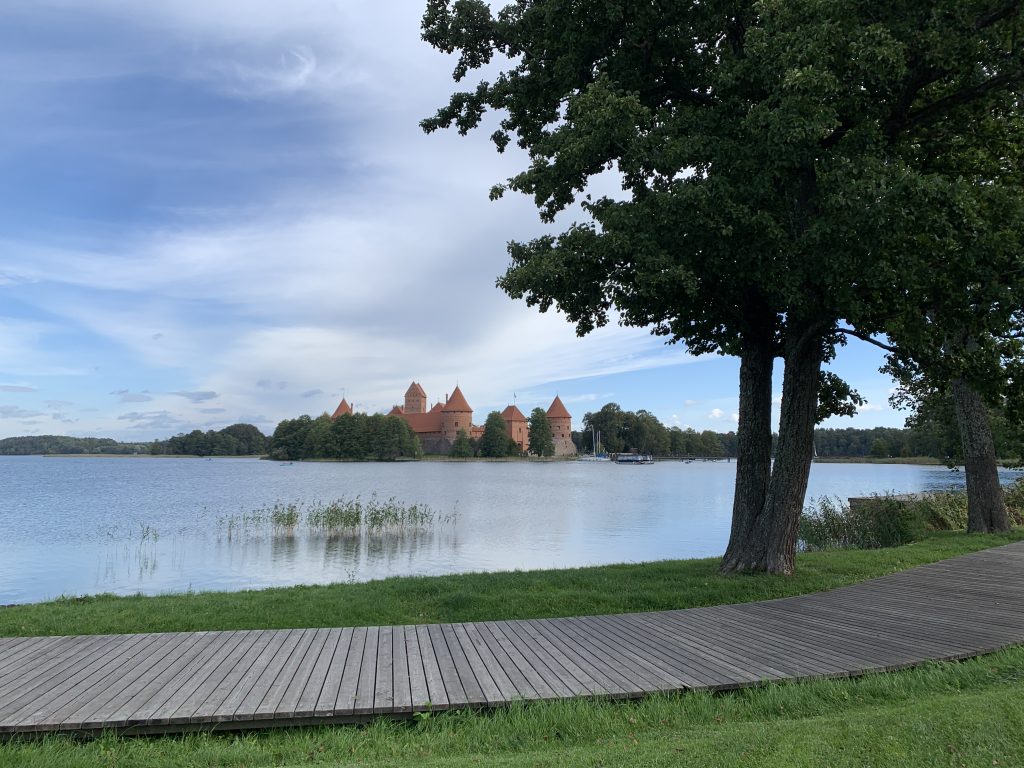
On Saturday morning we continued to the cute little town of Trakai, surrounded by lakes and a favourite day trip from Vilnius. As we only had one night there, I wasted no time and went out for a flat-out run, 9.4 kilometres of it, weaving past the other tourists. It didn't bother me as much as it might have, maybe because Sina and I had just been talking, in our last post, about being more mindful with the time we spend running. I even managed a dip in the lake at the end, which was, let's just say, refreshing.
Neringa: A Border, a Nobel Prize, and a Long Run by the Lagoon
The next day brought the longest drive of the trip, but it was worth it. We took the small ferry from Klaipeda to the island of Neringa, down to Nida, one of the last three towns before the border with Russia.
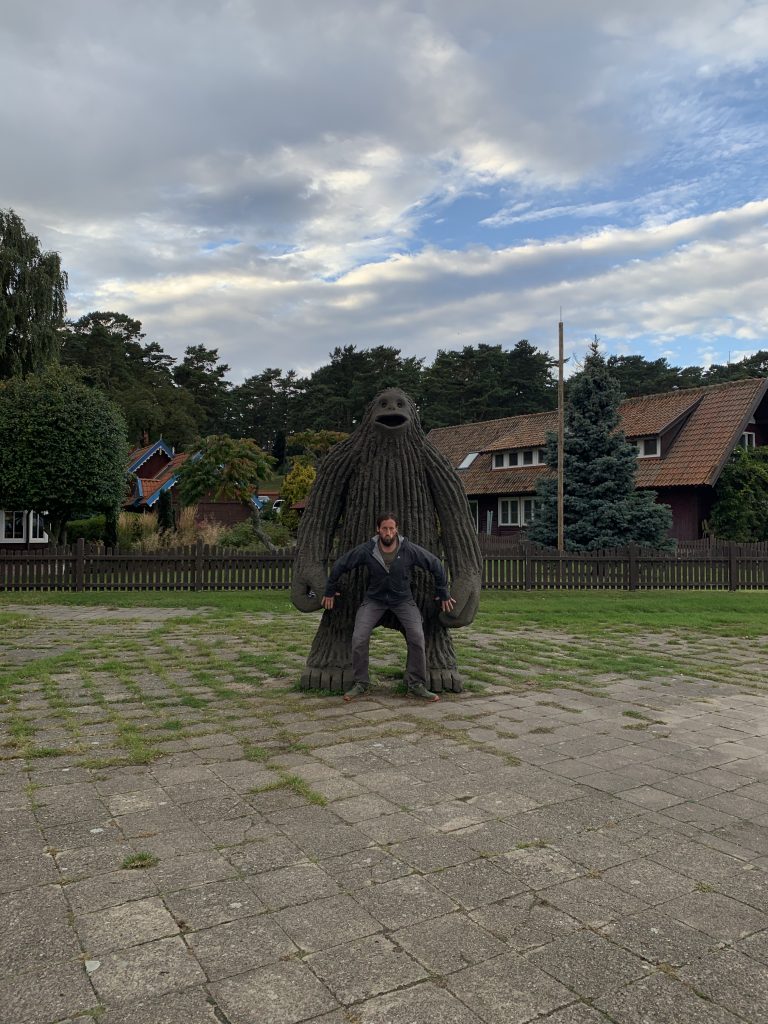
That border is worth a line or two, because it isn't a border in the ordinary sense. What lies on the other side is Kaliningrad Oblast, a piece of Russia physically cut off from the rest of the country, wedged between Poland and Lithuania on the Baltic coast. Until 1945 it was the northern half of German East Prussia, and its capital was Königsberg, not Kaliningrad. After the Soviets took the region at the end of the war, the German population was expelled, the city was renamed after a Bolshevik official who never once set foot in it, and the coastline that had been German for the better part of seven centuries became, almost overnight, Russian. The Curonian Spit we were standing on splits between the two countries, a UNESCO World Heritage dune system that doesn't care much about the checkpoint running across it.
Nida itself carries a smaller, gentler version of the same German thread. It was still known as Nidden when Thomas Mann built a summer house there in 1930, fresh off his Nobel Prize, and spent three summers writing there before the rise of the Nazis made the fishing village feel unsafe for a writer who'd already made his politics public. The house survived the war and is a small museum now, a strange, quiet footnote sitting a short walk from a border that used to run straight through the middle of the same cultural and linguistic world.
Running was no option that first day, but the next morning I went out for an 18.5-kilometre loop: the lagoon to my right on the way out, then across the spit and back up the coast with the Baltic on my right instead, no dip in the sea this time. It's a beautiful place to be, although off season a lot was closed, and the vegan options were thinner than we'd expected given how much choice there'd been everywhere else. What did surprise us was a three-kilometre queue for the ferry onto the island on the Sunday we arrived, and a much quieter crossing when we left on the Tuesday.
Palanga and Back to Kaunas
Heading north to the seaside resort town of Palanga, we chilled on the Baltic shore and found another Omnigym, this one better equipped still, with a squat rack and several other stations. My run the next day was short, a 7.3-kilometre loop up Birutė Hill and along the shore, but the sunrise and a bit of sea breeze made the early start worth it.
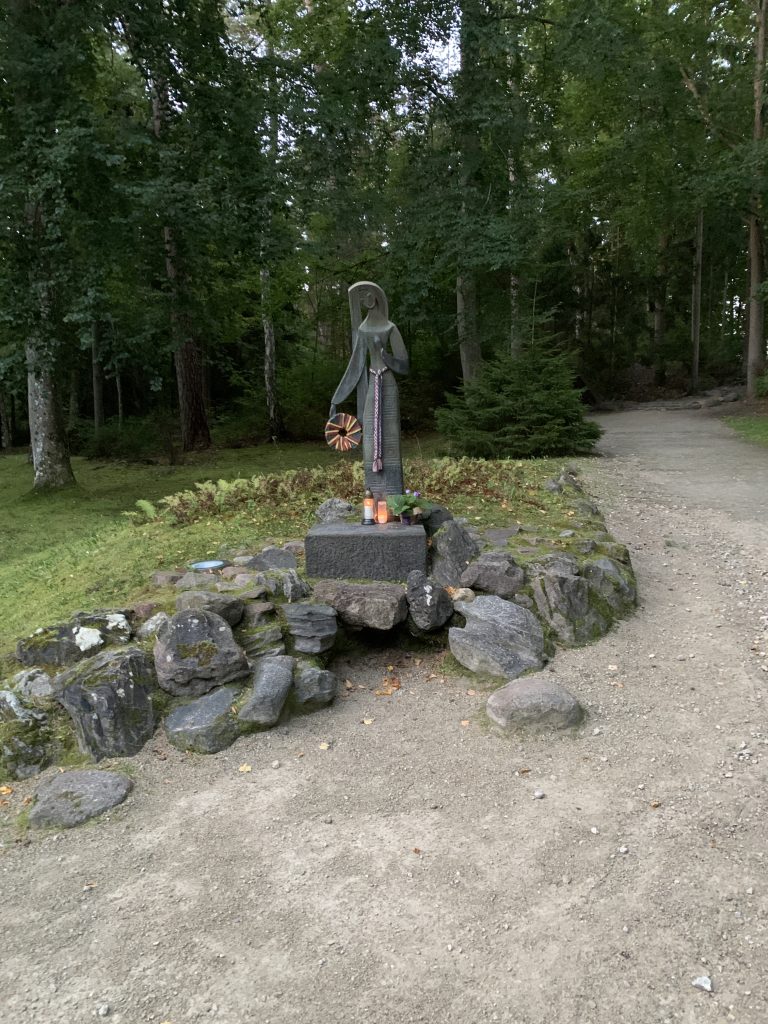
Worth a small detour of its own: not far south of the hill, still inside the same stretch of coastal forest, sits an old boundary stone marking the former northern edge of the German Empire, in place until 1919. Palanga sat right on that line for the better part of a century, the last strip of Russian-held coast before German East Prussia began. It isn't literally on Birutė Hill itself, but it's close enough to fold into the same loop without much extra effort, a second, quieter German thread running through this trip alongside the one in Nida, and a reminder that these Baltic borders have moved more than once in the last hundred years.
We headed back towards Kaunas, stopping for coffee at a near-deserted service station on the highway, which, of all things, had its own small calisthenics park too, though this time I gave it a miss. We got to the airport right on time, returned the car, and went back into the city, which I'd last visited in 2023. It's a spacious, likeable town, and unsurprisingly full of outdoor sport opportunities. The Omnigym we found there the next day was bigger again, with a leg press station and an accessible setup from Denfit, the Dutch outdoor fitness company that's been designing inclusive equipment since 2001, now supplying more than forty countries with adjustable-weight stations built for wheelchair users and older adults alike. Properly inclusive sport area, which is exactly the kind of thing worth pointing a camera at.
The final day came faster than expected, but there was still time before our flight for one last run through Kaunas, ten kilometres out past the confluence of the Neris and Nemunas, and a new personal record on a segment I've apparently passed before. I'm trying to put less weight on tracking every run and uploading it to Strava, but there's something undeniably satisfying about seeing you've beaten a stretch of road you last ran years ago.
What Lithuania Gets Right
Looking back at the whole trip, the thread that ties Vilnius, Trakai, Neringa, Palanga and Kaunas together isn't the running itself. It's how little effort the country makes you put in to find somewhere to do it. Every town we stayed in had at least one proper outdoor gym, not the token pull-up bar you sometimes get elsewhere, but Omnigym- and Denfit-grade equipment that a serious lifter, or someone who needs an accessible setup, could actually use. That's not an accident. It sits downstream of a fairly deliberate national strategy, one that treats physical activity as public infrastructure rather than a private hobby, alongside a basketball culture so central to national identity that it gets called a religion without anyone finding that strange. A country with an ageing population and a shrinking population overall has still managed to make outdoor sport feel like the default, not the exception. That's worth learning from.
Route notes
Vilnius forest loop to the Neris
Distance: 10.8 km
Elevation: +200 m / -230 m
Time at 6:00/km: ~1:05 h
Terrain: Forest singletrack, roots and steep short climbs
Worth a detour: Omnigym calisthenics park on the Neris riverbank
Route: komoot.com/tour/3290639500
Trakai Lakeside path
Distance: 9.4 km
Elevation: +20 m / -20 m
Time at 6:00/km: ~0:56 h
Terrain: Lakeside paths, busy with day-trippers
Worth a detour: A swim in the lake at the finish, if the season allows it
Route: komoot.com/tour/3292971259
Neringa / Nida lagoon and sea run
Distance: 18.5 km
Elevation: +70 m / -90 m
Time at 6:00/km: ~1:51 h
Terrain: Flat, coastal, a loop with the lagoon on the outbound leg and the Baltic on the return
Worth a detour: The Thomas Mann house, and the border checkpoint into Kaliningrad Oblast a little further south
Route: komoot.com/tour/3300490994
Palanga up Birutė Hill and shore
Distance: 7.3 km
Elevation: +20 m / -20 m
Time at 6:00/km: ~0:44 h
Terrain: Coastal, short and early
Worth a detour: Sunrise over the Baltic; the old German Empire boundary stone just south of the hill
Route: komoot.com/tour/3302110265
Kaunas, confluence of the Neris and Nemunas
Distance: 10.1 km
Elevation: +100 m / -100 m
Time at 6:00/km: ~1:01 h
Terrain: Urban, familiar segments
Worth a detour: The Omnigym and Denfit setup, side by side
Route: komoot.com/tour/3306812859
---
Written by Ingo@Lozania-Lifestyle.de